

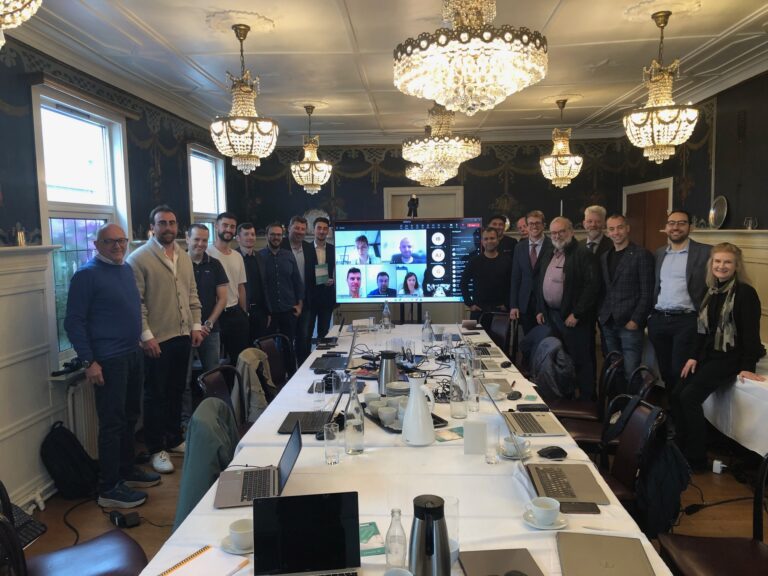
The REFRESH partners in Høyanger were joined by team members online.
The REFRESH project’s third General Assembly was held on 6-7 June. The meeting took place in Høyanger, Norway, and was hosted by our partner Gjenkraft.
This event marked month 18 (M18) of REFRESH, a major project milestone. At the end of June, Phase 1 of the project, which has focused on design and development of the REFRESH wind turbine blade recycling solutions, will be complete. Phase 2, commencing in July, will focus on implementing and demonstrating the technologies developed during the first phase.
During the first day of the General Assembly the project partners presented progress updates on the active project’s Work Packages (WPs) and outlined their plans for the next six months.
Here are some of the highlights.
Day 1
WP1: Design of dismantling, shredding and sorting technologies (leader MTB)
ETAT 9 has been assessing different blade cutting techniques against key criteria and testing methods for dust suppression to ensure compliance with occupational exposure limits. Pieces of cut blades have been sent to MTB Manufacturing for further processing. The MTB Test Centre has been studying the effectiveness of different pre-shredding and shredding machines and testing various technologies for sorting the blade materials. The sorting tests aim to maximise recovery of the composite materials, taking into account the requirements of the subsequent recycling processes. The sorted materials have been sent to Gees, Gjenkraft, CIRCE, Enecolab, Tecnalia, and Acciona for recycling and product development trials.
This WP comes to an end in M18. Over the coming months, these processes will be further optimised.
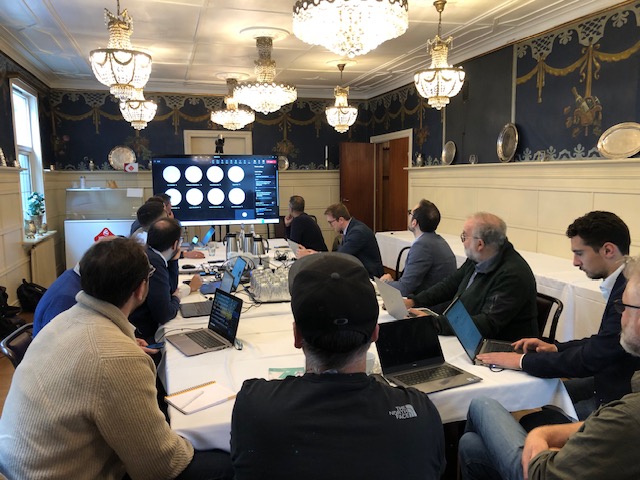
Day 1.
WP2: Development and customisation of recycling processes (leader Gees)
This work package, which also concludes in M18, includes the design of the mechanical recycling process by Gees Recycling, and the design of the thermal and thermo-chemical recycling processes by CIRCE and Gjenkraft.
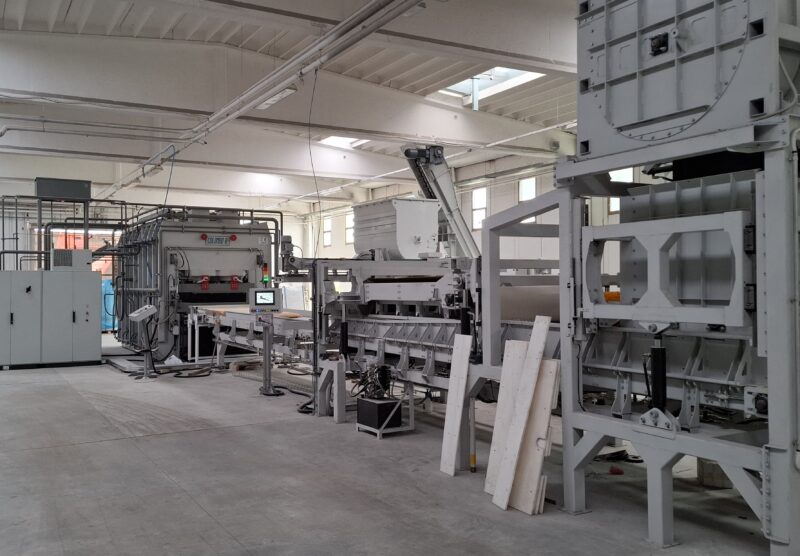
- The new Gees mechanical recycling line at its factory in Aviano, Italy, will transform the shredded and sorted blade materials into structural panels. These panels are resistant to weather and corrosion and have a wide range of potential applications, such as walls for equipment shelters and formwork panels.
- Gjenkraft is developing its thermal recycling process. This includes a pyrolysis step and a fibre purification stage. Gjenkraft has been carrying out trials in continuous and batch machines, studying the quality of fibre cleaning, testing the properties of the resulting fibres, and analysing the pyrolysis oils and gases. Potential applications for the fibres are being explored. The next steps include detailed plant engineering and installation of the new line.
- CIRCE is studying microwave (MW)-assisted pyrolysis and MW-assisted solvolyis processes in bench-scale units at its research facilities in Zaragoza, Spain. The role of process variables and feedstock on the fibres and oils obtained is being investigated, the fibres and oils are being characterised and their potential applications considered. A preliminary techno-economic assessment of the processes has been performed. The MW-assisted pyrolysis process design will be further developed over the coming months.
WP3: Business plan (leader RINA)
RINA has developed the business plan for the project, which includes the business model and the marketing and financial plans.
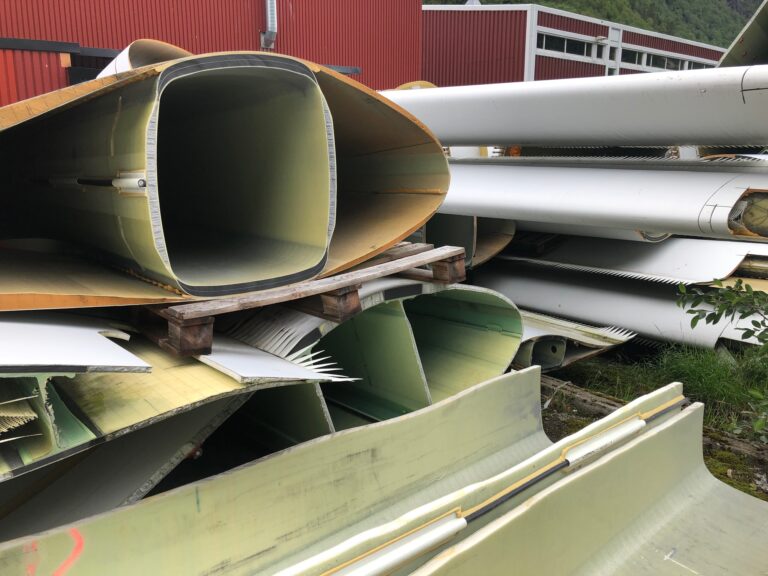
Wind turbine blades outside Gjenkraft’s plant.
WP6: Circular by design (leader CETMA)
This work package focuses on the deployment of repurposing and recycling strategies for end-of-use wind turbine blades, and the development of repurposed/recycled products and markets.
CETMA is finalising the REFRESH eco-design strategy, formulating guidelines for the manufacture of new products containing high amounts of recycled materials, with the objective of optimising their economic, environmental and technical performance. A range of applications are possible, including new components for the wind sector. Ways to repurpose cut blade parts in new uses are also being developed. Selected products will be demonstrated at prototype level during the second phase of the project.
A key task of this work package is to demonstrate the sustainability of the REFRESH concept. During the first phase of the project RINA has performed a preliminary life cycle assessment (LCA) of the proposed recycling processes. This provides a comparison of the impacts associated with linear disposal processes (e.g. landfill, incineration) with those of the circular REFRESH solutions. During the second phase RINA will demonstrate the overall sustainability of the concept by carrying out experimental LCAs of the recycling processes as well as economic and societal assessments.
The first day of the meeting concluded with a tour of the Høyanger Industrial Museum to learn about the village’s history in aluminium production, and a visit to the Gunnar S. Gundersen gallery. An evening event provided further opportunities for discussion and debate.
Day 2
The second day commenced with updates on three more WPs.
WP5: Digital platform and prototype development (leader TECNALIA)
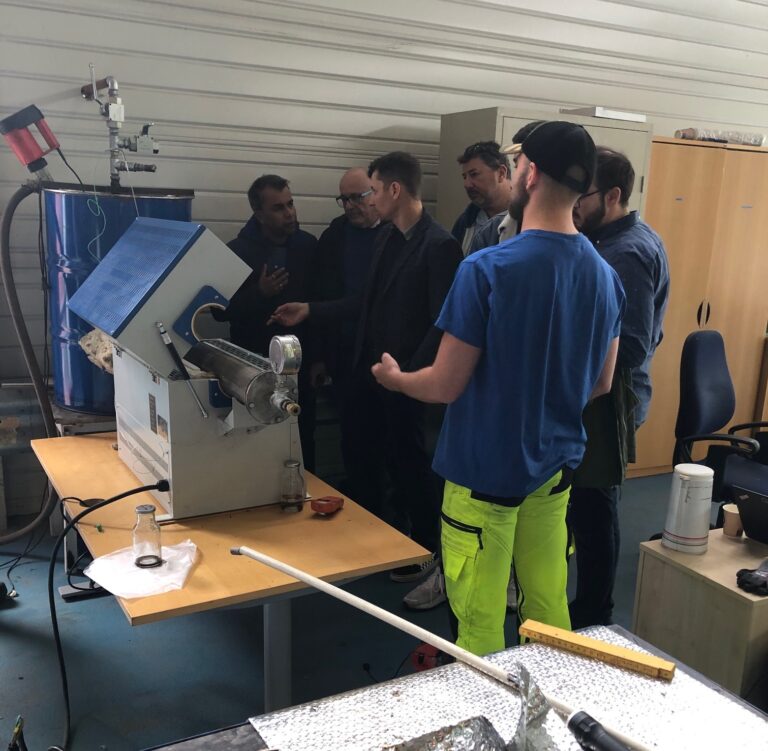
Discussing pyrolysis during the visit to Gjenkraft’s facility.
In this WP, starting in July, TECNALIA will develop a novel digital blockchain traceability platform (BTP) covering the whole supply chain. Related to this, a decision making tool will be developed to select the most appropriate option for end-of-use blades, taking into account factors such as market demand, environmental impact and costs. A Knowledge Hub including information on the REFRESH technologies, recycled materials and circular products will also be built.
WP7: Dissemination, Communication and Exploitation (leader EuCIA)
EuCIA provided an update on the project’s ongoing communication and dissemination activities and RINA presented the project’s stakeholder map. Stakeholder workshops will be organised during the next phase of the project.
WP8: Project Management (leader RINA)
The morning concluded with final remarks from project coordinator RINA on the next steps, and a final discussion session.
Visit to Gjenkraft
Following the meeting, the partners were invited for a tour of Gjenkraft’s recycling plant. The team had the opportunity to view the pyrolysis equipment and fibre treatment oven, as well as samples of recycled materials.
Outside the factory wind turbines blades of various sizes and designs are being stored prior to processing, truly illustrating both the size and complexity of the challenge!
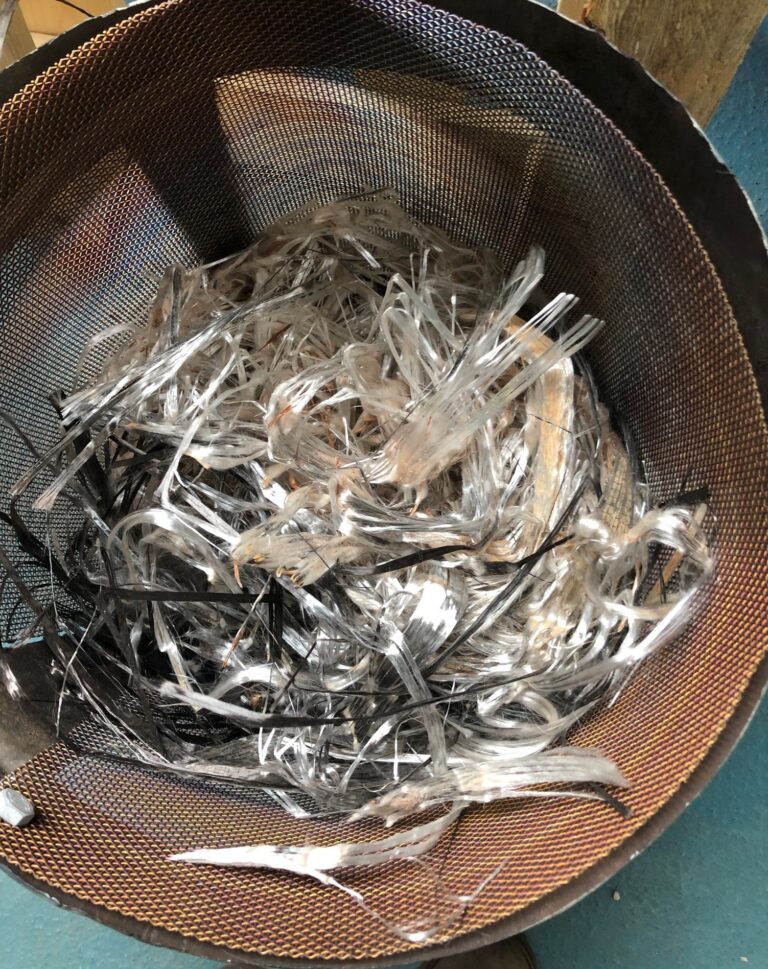
Recycled fibres.
Next steps
Over the next six months we look forward to launching Phase 2 of REFRESH. Our team members will also be participating in various conferences around Europe to share the project’s latest results and connect with research, industry and policy stakeholders.
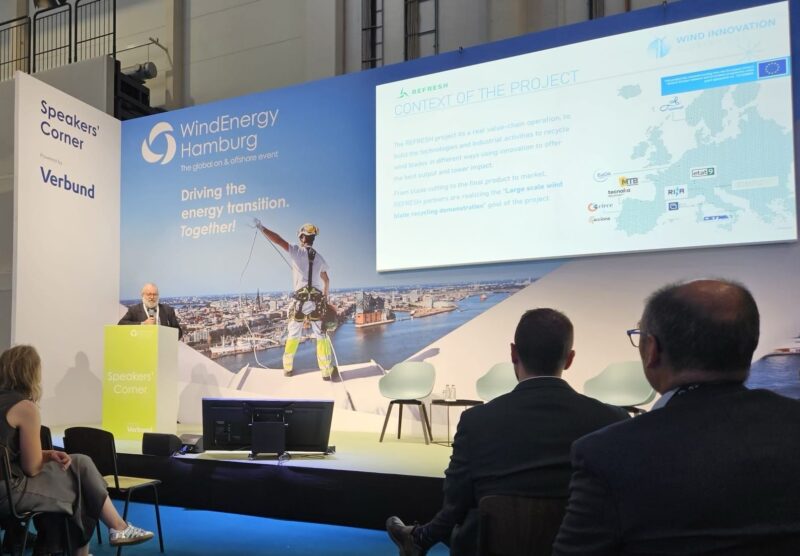
Gees Recycling presents REFRESH at WindEnergy Hamburg
REFRESH participates in WindEnergy Hamburg as member of Wind Innovation Cluster Hub